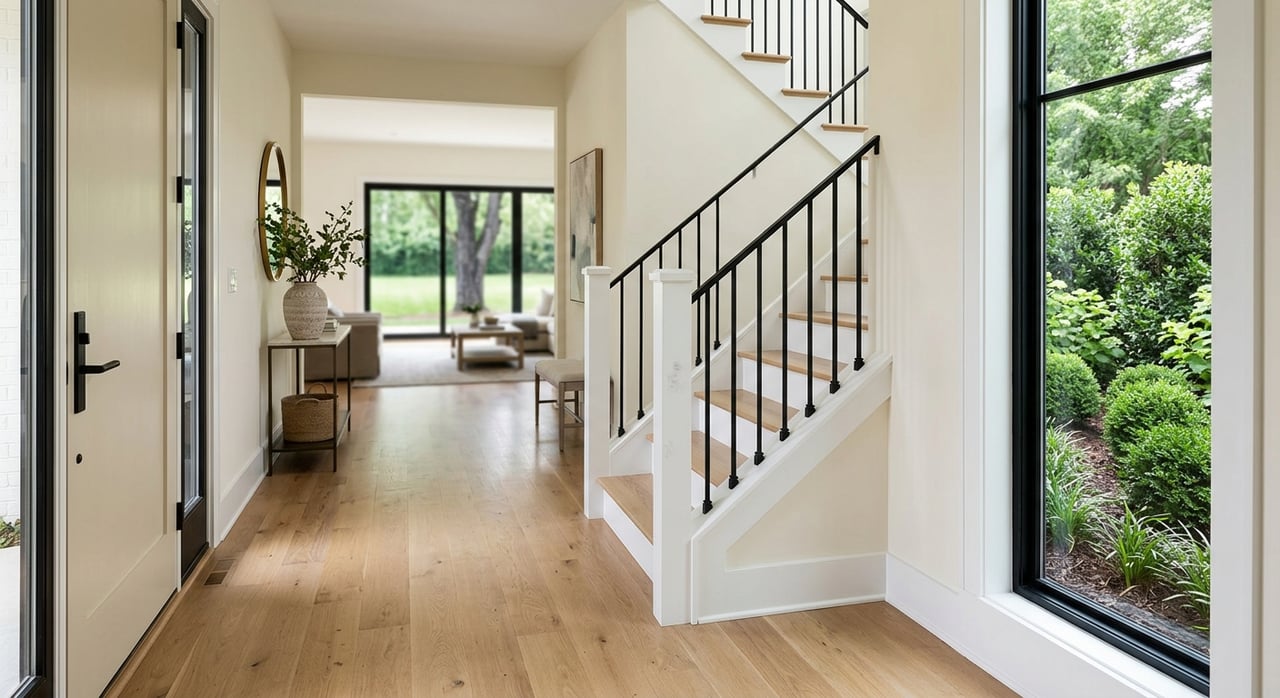
Spring Creek Ranch New Construction Guide for Buyers
June 4, 2026
June 4, 2026
If you are considering new construction in Spring Creek Ranch, one of the first things to know is this: you are not looking at just one neighborhood experience. You are looking at several distinct build options under one master-planned name, each with different lot sizes, home requirements, and approval standards. Understanding those differences upfront can save you time, reduce surprises, and help you choose the section that fits how you actually want to live. Let’s dive in.
Spring Creek Ranch is an 820-acre master-planned community in unincorporated Shelby County, centered around a 330-acre Jack Nicklaus Signature Golf Course. For buyers, that means the setting is established and the vision is highly curated.
It also means this is not a typical new-construction subdivision. The community includes multiple residential sections, each with its own feel, lot scale, and design rules. If you are comparing options in the 38017 area, Spring Creek Ranch is best understood as several different build products rather than one simple neighborhood choice.
The biggest mistake a buyer can make here is assuming every section offers the same process and lifestyle. In reality, the right fit often comes down to how much space you want, how custom you want the home to be, and how comfortable you are with architectural controls.
The Village is designed for buyers who want a lower-maintenance option within Spring Creek Ranch. Lots are typically 1/4 acre or larger, and the section is located close to the swim club.
Design guidelines require at least 2,500 square feet, side- or rear-facing garages, 9-foot ceilings, and traditional materials and proportions. Boyle currently features seven builders in this section, which can give you a wider starting point if you want a semi-custom path.
The Manor steps up in both scale and formality. Most lots are 1/3 acre or larger, and the current phase includes 29 lots.
This section requires a 3,500-square-foot minimum, 10-foot first-floor ceilings, 9-foot second-floor ceilings, and side- or rear-facing garages. The builder pool is broad, and the exterior palette is more tightly controlled, so this can appeal to buyers who want a polished custom-home feel with clear community standards.
Grand Manor is one of the most estate-oriented sections currently being marketed. It includes 28 lots ranging from about 0.7 acre to nearly 1.5 acres, and current availability indicates only two homesites remain.
The minimum home size is 4,500 square feet, and the architectural direction leans traditional European, including styles such as Tudor, Georgian, Neo-Classical, Norman, French Country, and French Colonial. Buyers in Grand Manor must use approved architects, so the process is more custom and more review-heavy than many neighborhood builds.
The Retreat is a gated enclave with 28 home sites and smaller lot dimensions, typically 90 by 140 feet. Private streets and washed-gravel curbs and gutters give it a more tucked-away character.
For buyers who want a more contained setting inside the larger community, this section may feel more intimate. It is still part of Spring Creek Ranch, but the footprint and layout create a different day-to-day experience than the larger-lot sections.
The Estates sit at the opposite end of the size spectrum. This section includes 24 lots across more than 60 acres, with homesites ranging from just under an acre to almost seven acres.
Like Grand Manor, The Estates require a 4,500-square-foot minimum. Design rules are intended to preserve tree cover and topography, which matters if you want a homesite with a more natural setting and room for a fully custom approach.
In Spring Creek Ranch, the details matter. This community is known for formal architectural control, and that can be a positive if you value consistency and long-term appearance. It also means you need to go in with a clear understanding of the approval process and lot obligations.
Current guidelines for sections such as The Manor, Grand Manor, and The Estates require ACC approval before construction begins. Boyle states that the HOA can fine owners who start work before approval.
That approval process can cover more than exterior style. Guidelines may address garage orientation, roof materials, windows, fencing, lighting, landscaping, drainage, and overall building massing.
The lot-purchase contract includes obligations buyers should review carefully before making an offer. For example, purchasers are required to install a Spring Creek Ranch standard street light and pay $3,000 per light.
The contract also places responsibility on the owner to maintain the lot before construction, comply with erosion-control and drainage rules, and install sidewalks according to the contract schedule. These are not small details, and they can affect both timeline and budget.
Because the community is built around a private club setting, some buyers assume lot ownership includes club access. According to the lot-purchase contract, owning a lot does not grant golf-club access or membership.
If club access matters to you, that is something to verify separately. It should not be assumed as part of the homesite purchase.
Public listings offer a helpful snapshot of the range buyers may see in and around Spring Creek Ranch. Recent examples include:
Public lot listings also show a wide spread in homesite pricing, with examples around:
The key takeaway is that pricing varies meaningfully based on section, lot size, and build scope. A conversation about Spring Creek Ranch pricing only becomes useful once you narrow down which section you are actually targeting.
A smart Spring Creek Ranch purchase starts with more than the floor plan. Before you move forward, make sure you are comparing homesites and sections on the factors that will shape your full experience.
HOA dues are not one-size-fits-all across Spring Creek Ranch. Public listings show annual dues around $1,500 on some properties, but dues can vary by section and even by lot.
Before writing an offer, ask for the exact covenants, transfer information, and dues schedule tied to that parcel. This is one of those details that is better clarified early.
The community is often marketed as a county-only-tax or no-city-tax area. That may apply in some cases, but buyers should verify parcel-level tax treatment instead of relying on general community marketing.
That simple step can help you avoid budgeting based on an assumption that may not apply to your specific lot.
If school assignment is part of your planning, confirm it using the official Collierville Schools zone locator by exact address. Assignments should be verified at the property level rather than assumed from the broader community name.
This is especially important in areas where boundaries can be address-specific.
Spring Creek Ranch tends to fit buyers who want a more curated building environment and are comfortable with a structured process. If you value lot choice, architectural consistency, and the option to build within a larger master plan that ranges from smaller-lot living to estate homesites, it offers uncommon variety in one location.
It may be especially appealing if you are deciding between semi-custom and fully custom construction and want to compare both within the same community umbrella. The right section depends on your budget, how much design flexibility you want, and how involved you want the approval process to be.
As someone who genuinely enjoys the building and design side of real estate, I think Spring Creek Ranch is one of those communities where the details really matter. If you want calm, clear guidance as you compare sections, builders, lot rules, and next steps, Lauren Haynes would love to help you navigate the process.
Stay up to date on the latest real estate trends.
I approach every transaction with integrity, focus, and a commitment to delivering a seamless experience. From strategy to closing, I’m here to provide steady guidance tailored to your needs.
Lauren Haynes
7475 McVay Station Ct Ste 101 Germantown, TN 38017